
How To Un-Winter Your Roses: A Spring Rose Care Guide

Wondering how to un-winter your Roses the right way? As spring arrives, it's time to uncover, prune, and prep your Roses for a season full of beautiful blooms!
Follow these easy steps to revive dormant Roses, encourage strong new growth, and keep your garden glowing with color all season long.
Waking Up Roses After Winter
If you live in a warmer climate, you may already be seeing fresh growth—or even the first buds—from your Rose bushes. But for northern gardeners, Roses that were tucked in tight for winter are just beginning to stir from dormancy.
It's time to un-winter your Roses and help them bounce back from their long winter nap!
The Best Way To Overwinter Roses
If you're planning ahead for next winter or wondering how to uncover properly, here's a quick refresher:
- For Hybrid Teas, Grandifloras, Floribundas, Shrub Roses, and Climbing Roses, mound at least 12 inches of clean, dry mulch or arborist wood chips around the base in the fall.
- Taller canes or well-established Climbing Roses can be loosely tied together using twine or fabric strips to prevent damage from winter winds. For non-hardy Climbing Roses, gently bend and lay the canes down, then cover them with mulch to protect them from harsh temperatures.
- This insulation keeps the base of the canes and roots protected during freezes. Do not pack the material onto the crown.
- Always use clean, dry mulch or leaves and ensure the canes are dry before covering and insulating them. You do not want to trap moisture that may be carrying disease or fungus in with the Rose all winter long.
Not spring when you are reading this? You can read an in-depth step-by-step on winterizing your Roses in our Garden Blog Here!
Spring Rose Care: How to Uncover Roses
Once the ground has thawed and freezing temps are behind you, it's time to get to work!
Step-by-Step Guide to Un-Wintering Roses
-
Gear Up for Safety
Roses bite back! Wear heavy-duty gardening gloves and long sleeves to avoid those thorny surprises. Don't forget to sterilize your tools. -
Remove Winter Mulch
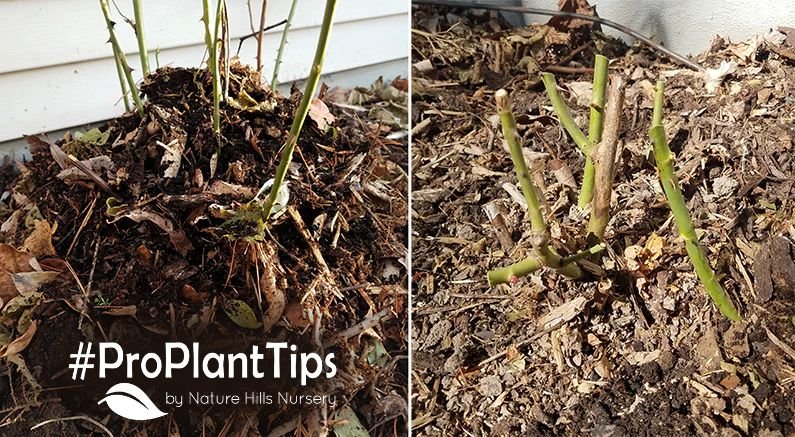
Pull mulch or wood chips away from the base of your Roses, exposing the canes and crown. -
Identify Your Rose Type
Before pruning, know whether your Rose blooms on new growth or old wood: - Modern reblooming Roses = prune in spring.
- Old-fashioned or native shrub Roses = wait until after they bloom in early summer. Cut those stems back after flowering to encourage next year's growth.
-
Pruning Prep:
Sterilize those shears and sharpen them! It is recommended you sterilize between cuts to prevent transferring disease from stem to stem. Here is a quick and easy list of ways gardeners can sterilize their pruning shears between cuts to prevent spreading disease:- Isopropyl Alcohol (70% or higher)
- Dip the blades or wipe them with a soaked cloth or paper towel.
- No rinsing needed. Quick-drying.
- Disinfecting Wipes
- Convenient and effective for quick sterilization between cuts.
- Great for on-the-go pruning.
- Bleach Solution (1 part bleach to 9 parts water)
- Soak blades for 30 seconds, then rinse and dry to prevent corrosion.
- Use with caution—bleach is harsh on tools.
- Hydrogen Peroxide (3%)
- Spray or wipe directly on the blades.
- Safe and effective, but slower-acting than alcohol.
- Tip: Always dry your tools thoroughly after sterilizing to prevent rust!
- Prune With Purpose:
- Hybrid Teas, Floribundas, Grandifloras, and many modern Shrub Roses bloom on new wood.
- Use sharp pruning shears to cut dead or dry brown canes all the way to the ground or as close to the crown as possible.
- Reduce healthy green canes to 6–8 inches tall—this encourages fresh, strong growth and bigger, better blooms.
Tips For Climbing Roses In Cold Climates
Climbing Roses need a little extra love:
- Most bloom on last year's wood, so avoid major spring pruning.
- Remove any winter-damaged or diseased stems.
- After the first flush of blooms, cut the oldest, thickest canes back to the ground to encourage new growth.
- If you're training your Rose to cover a trellis or arbor, you may leave more old wood intact to maintain coverage.
Un-Winterizing Roses in Frost-Free Climates
Even in regions without a hard winter, Roses still benefit from a little spring refresh:
- Clean Up Around the Base
- Remove fallen leaves, old mulch, and any debris to prevent pests and disease.
- Light Pruning
- Trim lightly to shape the plant and remove any dead, damaged, or crossing branches. Trim interior branches out to open it up for air circulation.
- All Roses appreciate a haircut to encourage lush new growth and even up their overall form.
- Feed Your Roses
- Apply a balanced, slow-release fertilizer or a Rose-specific blend to jumpstart the growing season.
-
Refresh Mulch
Add a fresh 3-4 inch layer of mulch and/or compost around the base (keeping it off the stems and crown) to conserve moisture and keep roots cool.
- Inspect for Pests
- Mild climates can mean active pests year-round. Start your organic or systemic pest control early if needed.
Additional Rose Growing Tips

1. Companion Plants:
Clematis vines make stunning climbing companions for your Roses. Their twining stems and colorful flowers weave beautifully among Rose canes without overpowering them. Instead of mulch, you can underplant with a flowering groundcover or an aromatic groundcover that helps drive away pests!
2. Sunlight is key!
The more direct sun your Roses receive, the more flowers they'll produce! Full sun (6+ hours per day) also helps plants grow sturdier stems and encourages reblooming. If a tree or nearby shrub has grown considerably since you planted your Rose, and it's now shading out some of the sun—it's time to consider trimming the shrub or moving your Rose for optimal sunlight exposure.
3. Water wisely!
Watering the right way is important! Always water your plants at the root zone, not the leaves! This works not only to prevent fungal issues but also prevents leaf burn when the summer sun becomes intense.
4. Mulch it up!
Keep a 3-4 inch deep layer of shredded bark or arborist mulch around the base to:
- Retain moisture
- Reduce weeds
- Cool the roots
- Prevent soil-borne diseases from splashing up onto the foliage
5. Insect & Disease Management
If insect pressure is light, go the organic route with neem oil, insecticidal soap, or by encouraging natural predators. Check out these top beneficial insects!
For areas with heavy infestations, consider granular systemic Rose care:
- Apply to the soil
- Water in well
- Let the Rose take up the protection through the roots for a longer-lasting defense
6. Modern Shrub Roses: Low Maintenance, Big Impact
With so many low-maintenance, reblooming Shrub Roses available today that are naturally disease and pest resistant, there's no reason not to add one (or five!) to your landscape.
Today's modern Rose bushes are ideal for today's busy gardeners who still want to enjoy vibrant, fragrant flowers from spring to frost!
Roses Deserve A Spring Wake-Up Call

Un-wintering your Roses is your garden's way of saying, "Let the blooming begin!" By pruning properly, knowing your Rose variety, and giving your plants the care they need, you're setting the stage for a season of lush foliage and jaw-dropping blooms.
Roses are more than just a pretty face—they're resilient, rewarding, and worthy of a prime spot in your garden. And don't forget, freshly cut Roses are just as stunning indoors! Snip a few for your nightstand or kitchen table or to gift to a friend.
Need help choosing the perfect Rose for your space? Nature Hills Online Plant Nursery is here for you! Browse our massive selection of premium-quality Roses at Nature Hills Nursery, and let us help you plant the Rose garden of your dreams.
Happy Planting!

