
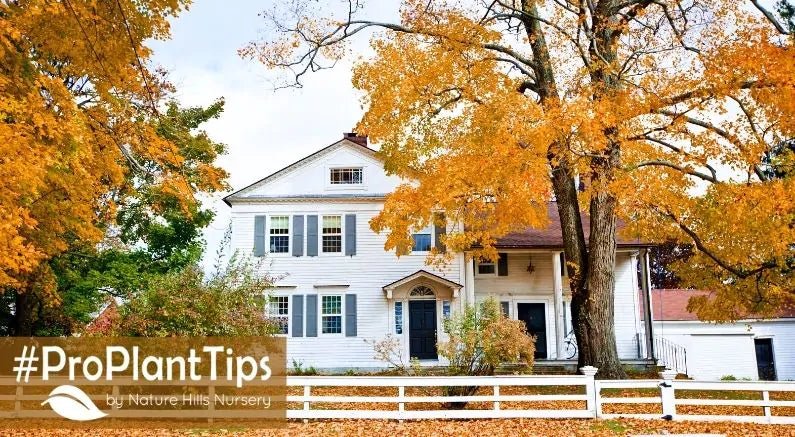
You can feel it in the newly established crisp air and see it on porches in every neighborhood-- the fall season has arrived. From pumpkins galore aesthetically placed on steps to picking your very own apples for a homemade cider recipe, fall is full of passed down traditions.
However, the Jack-O-Lanterns and the visits to pumpkin patches aren’t the only things that let us know fall is here. It’s the burnt oranges, coffee-like browns and crimson reds upon the foliage of trees that are most admired come autumn.
We are sure that you are not the only one to stop mid-walk to gaze at the striking red tree that compliments a yard. And we speak for ourselves when we say the mellow yellows always have us stopping and staring for a minute...or five.
Seeing the colors come alive each fall never fails to make us want to plant a few fall color trees in every available yard space we have! Are you the same?
If so, keep reading to fully embrace the fall season by adding the very best calming, yet colorful fall colored trees this season!
Quaking Aspen

If you’re looking for the cliche fall color foliage, you have hit the motherload. The Quaking Aspen (Populus tremuloides 'Quaking') is a fast-growing native tree that is known for its heart-shaped leaves that flutter with ease in the wind.
In fact, some call it a ‘trembling aspen’ because of the soothing sound the leaves create when swaying in a light breeze. National forests and state parks adore them, which is most likely where you have spotted a few-- or a hundred.
In the fall, its already unique leaves will slowly change to an incredibly bright yellow the engulfs the top clear down to the bottom.
Without a doubt, this tree in your yard will make a big statement for all to see. Better yet, you’ll have this head turner and show stopper for years to come!
Imagine spending an autumn afternoon resting in a comfortable hammock stationed between two backyard Quaking Aspen trees. The above views will never get tiring, but the slight leaf rustle will drift you to sleep. It doesn’t get much better than that.
Princeton Sentry Ginkgo

Say hello to the king of fall foliage, the Princeton Sentry Ginkgo (Ginkgo biloba 'Princeton Sentry'). With a mix of golds, oranges and yellows in fall this ginkgo tree is a must have!
Although vibrant in the autumn, the Princeton Sentry Ginkgo tree is most known for the two-lobed fan shaped leaves. They hold an almost leathery texture and are guilty of making people passing by reach out to feel them.
As the season progresses, brilliant yellows shimmer in full sun take over the tree. Enjoy the show for several weeks until a golden blanket surrounds the base of the tree. We highly suggest raking the leaves up in a pile for a classic jumping session.
Place this ginkgo as a showcase specimen in front of your decorated home. Or maybe as a shade tree in your backyard. It will even look good established along your neighborhood street to greet those passing by.
Ask yourself truly, does it feel like fall without a nearby ginkgo tree?
Sugar Maple

Get every fall color with a Sugar Maple (Acer saccharum) in your yard! Imagine having lovely yellow, orange and red displaying at the same time each year.
The Sugar Maple gives us one of the most remarkable shows of color, so don’t be alarmed if your neighbors are constantly asking where you got this tree.
This small tree also keeps a rounded form that quickly grows on a straight base. It is cute and compact for even the smallest of landscapes.
In addition, the Sugar Maple produces some of the sweetest tasting sap that is less cloudy and higher quality than other comparable maple trees. During the spring, easily drain off some of the sap and boil it down for homemade syrup that can be shared with family and friends.
Grow a row of them for a plentiful harvest of sap each spring and a calming show of colors during autumn!
Shumard Oak Tree

The Shumard Oak Tree (Quercus shumardii) is one of the best trees for fall color. Maybe the light yellows and brownish-oranges are not your forte. Instead, opt for the deep crimson hues of this oak tree!
From start to finish, your front yard will be graced with a fiery red color that leads the pack. We suggest surrounding the bottom of the trunk with a variety of pumpkins to really embrace the season. Not to mention, it will be a hit decoration come Halloween night.
With this tree in the landscape, you’re not only adding to the spirit of autumn, but you’re also adding value to your property. The Shumard Oak Tree is highly valued for its quality timber and abundant wildlife food production.
Enjoy the years of shade, vibrant color and additional value with this oak tree!
Kousa Dogwood

The Kousa Dogwood (Cornus kousa) has plenty of tricks up its sleeve and fall color is among one of its best. Once the season approaches, the reddish purple color takes the leaves by surprise.
This, sometimes referred to as the Japanese Dogwood, is a prime choice for smaller landscapes, courtyard areas or nearby blank patios. But they also make for superb screening plants too that line larger properties.
Nonetheless, wherever and however you decide to style your Kousa Dogwood Tree, the foliage color will flourish every autumn!
Why Do Leaves Change Colors In The Fall?
Without knowing what persuades leaves to alter their shades every year, how can one truly appreciate the fall tree colors? Welcome to our Nature Hills crash course on leaves that turn a different color:
As we know, during the fall, the length of daylight changes which in turn causes temperatures to change. Because of this, the leaves stop making food as they do during the summer and spring.
Now, the vibrant peak color of green starts to fade as the chlorophyll slowly breaks down. This allows for the yellows and light oranges to shine through.
What about the reds and purples you may ask? For some trees, at the same time the green is fading, other chemical changes could occur.
They form additional colors by developing red anthocyanin pigments. Therefore, using those pigments and depending on the tree, purples and reds of sumacs are formed or maples get a brilliant orange.
In short, the different shades and colors we see during autumn are due to the mixing of varying amounts of chlorophyll and other pigments present in the leaf.
Other things like light, water supply and temperature play a role in the duration of the new color. Low temperatures tend to favor reds. And rainy days will further increase the color intensity overall.
So, the next time someone asks why the leaves in the fall are different colors, you can use our handy-dandy crash course and sound like a true botanist!

#ProPlantTips Benefits Of Planting Trees In Autumn
For many, spring has become the default planting season when it comes to gardening. And while spring is still a great time to plant, fall may be more ideal when it comes to adding trees to your landscape. And here is why:
- Extra Time To Establish
When you establish a new tree during fall, it gives the new sapling an extra growing season before undergoing the extreme stress and heat of summer. In addition, the cooler temperatures combined with rain fall allows for the tree to properly and effectively establish its roots.
Now, it can adjust to the heat or drought of the summer more easily!
- Hibernation & Dormancy
You may feel that the young tree is not strong enough to make it through winter and that the cold weather will have an impact on the tree’s overall growth.
However, trees go dormant during the winter which allows them to conserve energy and slow down their metabolism. This will only help your tree grow stronger during the winter.
- Fewer Pests & Diseases
Young trees are far more prone to pests and diseases. But, during the fall season, the numbers of pests and diseases are often lower because of the cooler weather. This means less stress being placed on the vulnerable tree!
With a less likely chance of your new tree getting eaten or bothered during the fall, it is a smarter choice to plant now.
Want to read additional benefits, how-to’s and more about planting during the fall? Explore our #ProPlantTips blog for fall and winter planting.
Start adding a couple of fall colored trees to your landscape for the next season and maybe your house will be the new talk of the town!
Not only look forward to apple cider and pumpkins, but also await the joys of soft yellows, burnt oranges, deep reds and unique purples that naturally visit your landscape.
Maybe a new tradition of planting a tree or two will catch grasp in your family-- who knows!
Happy planting!
