Shop With Confidence: FREE Growing & Glowing Promise

Free Shipping on Orders $199+

Care Tips for Small Ornamental Trees in Your Landscape

Care Tips for Small Ornamental Trees in Your Landscape - Nature Hills Nursery

Nature Hills Nursery |

The first crop that sells out on the Nature Hills site is our super popular smaller ornamental trees. Some customers call them “Patio Trees.” No matter what you call them, we see the trend to use smaller trees in both front and backyard landscapes getting bigger.

To keep up with the demand, we’ve really beefed up our numbers of smaller, more ornamental trees. After all, they fit so nicely into your landscape, and help you enjoy time spent outside on your patio.

Short on Space? Choose a Small Tree

With higher density housing in many areas, modern yards are not huge. Where space is limited, people want to choose plants with more ornamental attributes.

We’ve talked before about plant trends for more color and more seasons of interest. Plant breeders have introduced selections of highly ornamental plants that are the perfect complement to every landscape.

Why not bring the flowers, fruit, and fall color of these smaller growing trees where you can see them better? Use these plants up close and personal to appreciate the flowers, fruit, and great color.

Have a larger yard? Lucky you, you’ll be able to have more fun with these smaller, flowering trees by creating different "garden rooms" throughout your property.

Ornamental Trees

Flowering Shrubs Can Be Trained as Small Trees

Did you know that some popular shrubs can be trained to grow as a single stem plant? These tree form shrubs are known as “standards”, and they make excellent small trees.

Some of the most desirable tree form shrubs that have been trained by our nursery production team and grown as standards are Hydrangeas, dwarf reblooming Lilacs and Crape Myrtles.

For easy modern style, plant two of the tree form shrubs, one on either side of your front entrance to give your guests a real sense of welcome and a big dash of curb appeal.

You’ll also love growing these in pots on your patio. Use the Finger Test to check for moisture to ensure you keep them hydrated.

Trees Can Be Grown as Multi-Stemmed Bushes for Screening

On occasion, we offer small trees that are actually grown as multiple stem shrubs. These make wonderful, colorful, flowering, screening selections.

Some fine examples of trees grown as multi-stemmed shrubs include some Magnolias, Japanese Maples, Japanese Tree Lilacs and Crape Myrtles. These classic examples are quite popular, and we have a hard time keeping them in stock.

Seems like just about everyone could use a little more visual privacy in today’s small yards!

Read on to get expert tips from one of our resident horticulturalists. He’ll walk you through the selection and care for our most popular accent trees.

How to Care for Japanese Maples

Japanese Maples
Japanese Maples are outstanding plants for a wide region of the country. New selections offer finely textured leaf forms, summer and fall leaf color, and they come in many sizes. Japanese Maples are often selected for training into miniature bonsai plants.

They make incredible specimen plants as a focal point in your garden or landscape and prefer evenly moist soil. They love a deep layer of mulch over the roots, but not touching the trunk. Use one as a beautiful focal point for a Meditation Garden, or allow several to shine in a Japanese-style garden.

Select a spot out of the wind and that has some afternoon shade and your Japanese Maple will be happy. Morning sun keeps the leaves colorful and the dappled afternoon shade keeps them from drying or scorching.

How to Care for Flowering Dogwood Trees

dogwood trees
Flowering Dogwood trees are popular because of their smaller size and long, colorful display of flower bracts. They are native to the Eastern part of the United States, but they are grown as small specimen trees very successfully in hardiness zones 5-9.

Flowering Dogwood trees bloom in spring, have handsome summer foliage, lovely fall color, then develop showy red fruits that hang from late summer well in to the fall. Much like the care required for Japanese Maples, Dogwoods prefer cool, moist soil with protection from the hot afternoon sun, especially in warm climates.

There are many white selections, along with new hot pink flowering trees in this group. The height ranges from 15-30’, so you can select a variety that will work in the spot you have chosen for planting.

How to Care for Improved Crabapple Trees

Crabapple trees
Crabapple trees love colder climates and are very important additions to Northern landscapes.

Some of the older selections of crabapple varieties were very large growing and quite susceptible to apple scab, which would defoliate the plants in summer. They were also known as “one trick ponies” with only a small season of interest. Don’t let those old selections leave a bad taste in your mouth!

Plant breeders have improved Crabapples tremendously. This is actually a real success story in horticultural circles.

Consider one of the newer crabapple selections for your landscape. Sizes of mature plants range from small miniature selections to those that get to be 20’ tall.

Abundant swathes of gorgeous spring flowers appear early and last for weeks. Many of the pink and red crabapples have bronzy or reddish foliage color, while most of the white flowering crabapples have deep, dark shiny green leaves. Some varieties have the bonus of fall color before dropping to expose the winter fruit display to catch and sculpt the snow.

Cute, colorful, cherry shaped fruits may persist through the winter where they become an important food source for birds such as robins and cedar waxwings.

You’ll want to take another look at crabapples for your yard. These are easy to grow plants that only ask two things of you: full sun and well-drained soil. Give them that, and they will perform for decades in your landscape.

How to Care for Flowering Cherry Trees

flowering cherry
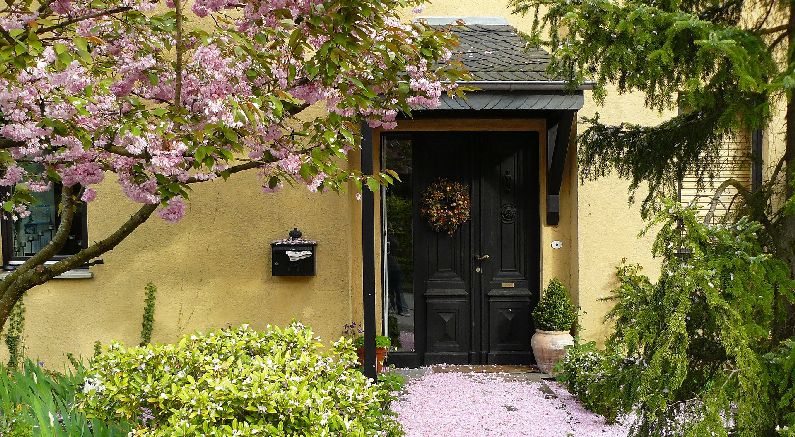
Flowering Cherry and Weeping Cherry trees are extremely popular, both because of the pink flowers and the options for weeping forms. You’ll be amazed at the early spring flower these trees display.

These low maintenance trees stop traffic in full bloom. Pick a sunny, well-drained spot to plant them.

Because it’s shallow rooted, it won’t like being a lawn tree, and doesn’t like being underplanted with groundcover or other shrubs or perennials. Instead, use a thick layer of mulch under this beautiful tree for it’s lovely blooms and attractive bronze foliage.

Try Flowering Cherry Trees in an edited Japanese style garden. Focus on the beautiful branch structure, flowers and find peace without any unnecessary distractions.

With its attractive, arching branches, the Weeping Cherry trees make an incredible, small specimen tree for your landscape. Weeping Cherry trees need full sun for best performance. Keep them watered, you don’t want them to be stressed from lack of water.

You can grow these in containers, or near your patio wherever you’ll be able to see and appreciate the blooms all along the long stems. What a pretty accent tree!

How to Care for Crape Myrtles

crape myrtle

An option for warmer climates is to utilize today's improved Crape Myrtles. The deep foliage color – almost black! - set against the myriad of flower colors available today make Crape Myrtles a phenomenal smaller ornamental tree for your landscape.

Use your new Crape Myrtle as a specimen screening plant for some privacy with loads of color, or along the back of your shrub border to jazz up your yard.

Some of the really small varieties work well as foundation plants. Choose a bit larger variety at the corners of your house to instantly ground it into your landscape. The largest varieties can be used as real ornamental trees in your yard, or to shade your patio.

Now, life is short. Please make good choices to avoid an ongoing pruning situation. It’s far better to simply select a plant that fits your space in the first place.

The hardest choice is which color flowers you want! Spanning from white, all the way through deep, delicious purple, you’ll find something you just love.

Plant Crape Myrtles in well-drained soil, and – while fairly drought tolerant - give them enough water especially in June and July during bloom. They’ll love morning sun, if you’ve got it.

Prune these in later winter or early spring before the plant starts to leaf out. It’s important to note that they’ll leaf out a bit later than other plants in spring, so please be patient. You will also want to prune off suckers that emerge in spring to keep it trained as a single trunk tree.

How to Care for Redbud Trees

Redbuds
Redbuds are great, native ornamental trees. In very early spring, small, electric, fluorescent lavender colored blooms are borne all along the stems of the plant. The flowers sometimes last for a month before the interesting purple and red leaves emerge to follow the flowers.

We even offer weeping Redbud for another interesting specimen for your yard.

This can be grown as either a single stem or multiple stem tree, and it gets 15-20 feet or so. These are easy to grow and definitely easy on the eyes.

When it comes time to plant, always be careful that you do not plant your new plants too deep. To ensure a successful transplant, water carefully.

You’ll feel a little like Goldilocks trying to eat porridge. Don’t let your new plant dry out. But, don’t keep the soil too soggy, either. Use that Finger Test from above to see when the roots of your beautiful tree need water.

Previous Next

Frequently Asked Questions

How do I care for small ornamental trees in spring to set them up for healthy growth?

Spring is the ideal time to give your small ornamental trees a strong start by applying a balanced slow-release fertilizer just as new growth begins to emerge. Inspect branches for any winter damage and prune out dead or crossing wood before the tree puts energy into leafing out. For tree form standards like Hydrangeas or dwarf Lilacs, check soil moisture regularly using the finger test, since these smaller rootballs can dry out faster than you might expect. Finish with a 2 to 3 inch layer of mulch around the base, keeping it a few inches away from the trunk, to retain moisture and regulate soil temperature as the season warms up.

How do I get crape myrtles to bloom more consistently each season?

Crape myrtles bloom most consistently when planted in full sun locations receiving at least 6 hours of direct sunlight daily, as shade is the primary reason these trees underperform. They thrive in USDA zones 6 through 10 and require well-drained soil to avoid root stress that reduces flowering. Avoid the common mistake of heavy pruning, sometimes called "crape murder," which delays bloom time and reduces flower count. Feed with a low-nitrogen, high-phosphorus fertilizer in early spring to encourage maximum bud set for the season ahead.

Which small ornamental trees work best for a front yard or tight landscape space?

For tight front yard spaces, tree form standards like Hydrangeas, dwarf reblooming Lilacs, and Crape Myrtles are excellent choices because they combine vertical structure with seasonal color without overwhelming a small footprint. Magnolias, Japanese Maples, and Japanese Tree Lilacs grown as multi-stemmed shrubs also work beautifully when you need privacy screening along a border. For a polished, welcoming look, plant two matching tree form standards flanking your front entrance. Browse the Nature Hills patio tree collection early in the season, as these compact ornamentals are consistently our fastest-selling category and frequently sell out.

How do I choose a small ornamental tree that will stay the right size at maturity without outgrowing its spot?

Choosing the right small ornamental tree starts with checking the mature height and spread listed on the product page and comparing that to your available space, including overhead clearance and distance from structures. Many of our patio trees and tree-form standards top out at 6 to 15 feet, making them ideal for smaller modern yards where a full-size shade tree would quickly overwhelm the space. Look for trees bred and selected specifically for compact growth rather than varieties that have simply been pruned back, since a plant's genetics will always win in the long run. Use the mature size listed at naturehills.com as your guide, give the tree the full footprint it needs at planting, and resist the urge to squeeze it into a tight spot hoping it will stay small.

How far from my house, driveway, or fence should I plant a small ornamental tree?

For most small ornamental trees, a general rule of thumb is to plant at least half the tree's mature spread away from any structure, driveway, or fence line. For example, a tree with a 15-foot mature spread should be planted no closer than 7 to 8 feet from your house foundation or hardscape. Always check the mature width listed on your specific tree's product page before you dig, since patio-sized trees can range from 6 to 20 feet wide depending on the variety. Measure your space first, then choose your tree to fit it rather than the other way around.

What kind of soil do small ornamental trees need, and should I amend the planting hole before I plant?

Small ornamental trees perform best in well-draining soil with a slightly acidic to neutral pH, generally between 6.0 and 7.0. Avoid amending the planting hole with compost or other organic matter, as this can create a "bathtub effect" that traps water around the roots or encourages roots to stay in the hole rather than spreading outward. Instead, backfill with the native soil you removed, and focus your amendments on top-dressing with a layer of mulch 2 to 3 inches deep around the base, keeping it a few inches away from the trunk. Get a simple soil test before planting so you know exactly what your site needs and can make informed adjustments over time.

How much mulch should I put around a small ornamental tree, and should the mulch touch the trunk?

Apply a 2 to 3 inch layer of mulch in a wide ring extending out to the drip line of the tree, keeping it at least 3 to 4 inches away from the trunk. Mulch piled against the bark, often called a "mulch volcano," traps moisture and promotes rot, fungal disease, and pest damage at the base of the tree. Refresh your mulch layer each spring to maintain proper depth as it breaks down over time.

How do I prune a small ornamental tree without ruining its natural shape?

Prune small ornamental trees in late winter or early spring before new growth begins, as this timing minimizes stress and allows you to clearly see the branch structure. Always use clean, sharp pruning shears and remove no more than one-third of the plant's growth in a single season. Focus on cutting out dead, damaged, or crossing branches first, then step back frequently to assess the natural form before making additional cuts. When in doubt, remove less rather than more, since you can always take more off later but cannot undo an overly aggressive pruning session.

Should I prune a small ornamental tree at planting time, or wait until it is established?

At planting time, resist the urge to prune your small ornamental tree beyond removing any dead, damaged, or crossing branches. Heavy pruning at planting stresses the tree by reducing the leaf area it needs to establish a healthy root system. Wait until the tree has settled in for a full growing season before doing any significant shaping or structural pruning. Focus your first-year energy on proper watering and mulching, then address form and structure in late winter or early spring of year two.

How do I keep a small ornamental tree from getting too large without topping it?

The best way to manage the size of a small ornamental tree without resorting to topping is to select the right tree for the space from the start, since topping causes lasting damage and leads to weak, fast-growing regrowth. Prune in late winter or early dormant season, before new growth begins, removing any crossing, crowded, or outward-growing branches back to a lateral branch or the main trunk. For most small ornamental trees, keeping annual pruning sessions light, removing no more than 25 percent of the canopy at a time, will maintain a natural shape and manageable size. Focus on thinning rather than heading cuts, and browse Nature Hills for varieties specifically bred to stay small so your pruning work stays minimal.