
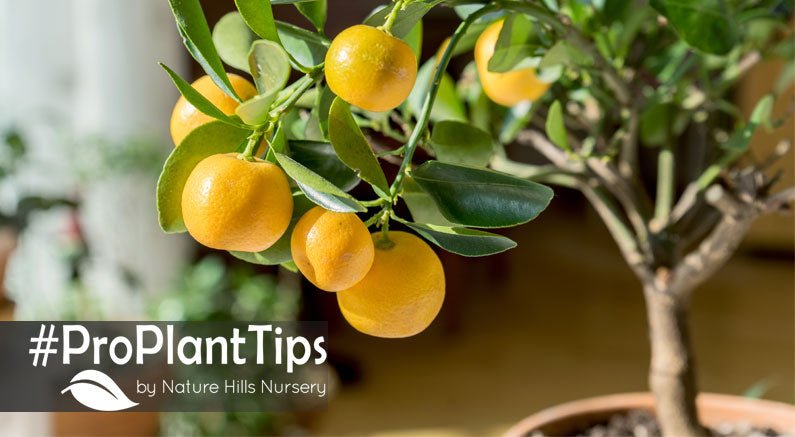
Just getting started? Read our Selection Guide for the best Citrus varieties for container culture.
Already ordered your new Improved Dwarf Meyer Lemons, Bearss Limes or Calamondin Oranges? Congrats!
Let's get started early to prepare for the arrival of your new tree.
Finding a Suitable Pot or Fabric Grow Bag
Making good choices about containers doesn't have to be expensive. People are getting really creative in their Victory Garden designs. Go fancy if you can, or "cheap out" if you need to.
Either way, the fruit will still taste great!
Trees grow happily in plastic or terra cotta, but you need to look for a tall, skinny design. The deeper, the better, as Citrus root systems will grow down first and then fill in outward.
You'll also need to plant them in a pot that is a little wider than its growing pot.
Our 4x4x9 inch containers are 4 inches across. Use a pot that is about 8 to 12 inches wide and 12 inches deep for starter trees. 2 gallon buckets or fabric grow bags will work as a cheap alternative for a year or two.
#3 gallon containers can fit in a 16 inch pot that is at least 18 inches deep. 5 gallon buckets or grow bags will work.
You'll eventually size up to a 10 gallon grow bag, or 20-inch pot. Take your time to carefully shift your Citrus tree over time.
You May Need to Add Drainage Holes to Your Pots
Drainage is a really big deal for Citrus trees. They hate to sit in soggy, standing water.
Tall, skinny ceramic or terra cotta pots need a large drainage hole. Make your buying decision on the size of the drainage hole.
You'll want to make sure that the hole doesn't get covered up from inside or outside the pot. Water must drain freely from the pot.
If you have a plastic or resin pot, go ahead and drill several more large holes in the bottom. You can always fit a piece of window screen inside the bottom of the pot to keep the soil inside.
If you’ll be lugging your plant indoors for the winter months, you might consider a lightweight resin pot. These can be painted, or even covered with a chic burlap wrap.
Adding a sturdy plant caddy on wheels is a great idea if you want to go with ceramic. Pro tip, place the empty pot on the caddy before you fill it with potting soil.
Don't use a saucer outside. If you really need to protect your surfaces, elevate your plant up above the saucer by using several bricks placed around the drainage hole. Watch out for the pot sitting in standing water, and fix the situation quickly.
#ProPlantTips for Planting Citrus Trees in Pots
Plant into an acid-lovers, well-drained potting soil typically used for Rhododendrons, Camelias and Azaleas. Add 25% 1/4 inch “pathway bark” (or Orchid mix) to the mix for porosity. There are also speciality, sharply-drained potting mixes for Citrus trees available.
Be sure not to plant your Citrus plant deeper than it is growing in the pot. That funny bump on the trunk (called a graft union) should be well above the soil line.
Leave about an inch of the pot showing above the dirt. That rim of space will help you avoid splashing as you water your plant.
Repot Citrus trees in pots every 3 to 4 years. Always shift to the next size container and avoid going too much larger than the current pot size.
The #1 Mistake in Growing Citrus in Pots
Never, ever, ever repot trees that are being kept indoors during the wintertime. Wait until they are outside during the growing season to repot.
Feeding Citrus Trees in Pots
Citrus trees grown in containers do require regular feeding with Citrus-formula or an organic, all-purpose granular fertilizer every other month through the summer. Follow directions on the label.
Wait until you’ll be gone for the day to apply them. They won't smell very good for a day or two.
Growing Indoor/Outdoor Patio Citrus Trees
If you live in USDA Growing Zones 3 - 7, you'll be bringing your container Citrus tree inside for the winter. Choose the best semi-dwarf varieties that will successfully fruit indoors.
Enjoy your pots outside on the patio or balcony all summer long starting once the nighttime temperatures are consistently above 50 degrees. You’ll love them as tropical-looking feature plants all growing season long.
As the season winds down and temperatures dip into the low 40 degree mark, start to transition your plants. You’ll move them into a position by your home’s exterior wall about 2 weeks before you bring it inside.
Carefully check your trees for any insects before you bring them inside. Use a blast of high pressure water to keep insects in check. Apply insecticidal soap to coat the top and bottom of the leaves.
Preparing a Place for Indoor Citrus Trees in Pots
Citrus Trees grown in pots indoors love as much natural and bright sunlight as you can give them. They need light to ensure the fruit continues to ripen and doesn’t fall off the tree.
You may need to supplement with an artificial LED grow light over the top of the plants. This will boost the light it receives during winter.
Keep them around 50 degrees indoors. The ideal place is in a spot right by a south-facing window. Use a small space heater to keep the temps well above freezing.
Avoid placing your trees near heater vents, fireplace or in the kitchen. They create a lot of dry heat, which isn’t the best for the plant.

Winter Care of Indoor Citrus Trees in Pots
No need to fertilize your plant while it is indoors for winter. You also won’t have to water much during the winter season.
Citrus requires far less water when indoors, so be careful not to overwater your plant Keep the soil moisture on the dry side of moist.
Why Are My Citrus Trees Shedding Leaves?
You might see leaves dropping on your indoor Citrus trees during winter. They are slow to add new growth and can commonly shed some older, smaller interior leaves as this time of the year.
Citrus trees can hold the same leaves for as long as 3 years. In winter, there is a natural elimination of older leaves.
Pot size, water, and fertility can affect how many leaves may be shed from your plant. Any leaves that do drop from the plant, remove them from the soil and discard them.
March is when the plants start to become more active. As the days get longer and sunnier, your Citrus trees will add a nice flush of growth.
Tips on Moving Citrus Trees in Pots Outside Again
Once the nights are in the 50’s consistently, you can start to transition them outside again. Take your time and gradually move them closer to their summer home over the course of a week or two.
This is where those wheeled plant caddies will save your back! They are well worth the investment.
You’ll be glad you took the time to slowly transition these special plants. Fertilize them once they are outside again with a good, organic, slow-release fertilizer.
Where Can I Grow Citrus Trees in the Ground?
If you own property in Zones 8-10, you can plant and enjoy these gorgeous trees in the ground. Use them as a wonderfully lush privacy screen with big benefits!
Keep your tree outdoors smaller with summer pruning, or let them grow to their full height and spread for a fabulous specimen tree. Best kept in a mulched bed, the fruit display and lush, tropical foliage is ornamental enough for use in a front yard foundation planting.
Just renting? No problem! You can also grow Citrus trees in containers in these Zones.
You can leave your container Citrus trees outside year-round in these warm climates! For longer cold snaps in Zones 9 or 10, string C9 Christmas lights through the tree and cover the tree with a frost blanket.
Nature Hills takes a lot of pride in offering commercial orchard-quality plant material grown in the United States. Source your fruiting trees from us for high quality results.
Have fun with your plants, and relish the rewards of homegrown fruit.
